

打造贵州精品 重振白酒产业 Revitalizing Guizhou’s Baijiu Industry Through Premium Branding
目前,白酒销售“价量齐减”。除个别酒品外,几乎所有的酒,市场价与出厂价倒挂;绝大多数酒企,销售不到往年同期的五分之一。作为贵州优势和财政支柱的白酒产业,将何去何从。这已是牵动政府、行业协会、酒生产企业、原料供应和营销商,以及消费者,非常关注的问题。贵州白酒还能重掁吗?
Guizhou’s baijiu industry is currently facing a dual decline in both price and volume. Except for a handful of premium products, most baijiu brands are experiencing a price inversion, with retail prices falling below factory prices. For the majority of producers, sales have dropped to less than one-fifth of previous years. As a traditional strength and a key pillar of Guizhou’s fiscal economy, the future of the baijiu industry has become a pressing concern for governments, industry associations, producers, suppliers, marketers, and consumers alike. Can Guizhou baijiu stage a comeback?

酒是既是物质产品,又是精神产品。酒从野果自然发酵猿猴造酒说开始,至今已有六千年历史,她不断地满足着人日益增长的物质文化需要。这种需要,也不断地推动着酒生产和消费的进步与发展。如何生产“价廉物美”的酒,满足人日益增长和变化的消费需求,应该是酒生产的出发点和落脚点。
Baijiu is both a material and cultural product. With a history spanning over 6,000 years—from the lore of wild fruit fermentation by apes to today’s refined distillation—it has continuously fulfilled people’s evolving material and cultural needs. These changing demands have driven the ongoing development of both baijiu production and consumption. The core mission of the industry should be to produce high-quality, affordable products that adapt to these shifting consumer preferences.
从经济学角度看,以最小的投入(价廉),实现最好的产出(物美),这是一个使有限资源合理配置,逐步实现帕累托最优的经济学永恒的课题。
From an economic standpoint, achieving optimal output (high quality) with minimal input (low cost) remains a fundamental principle in the efficient allocation of limited resources—a constant pursuit of Pareto optimality.
早在2022年,我们参与研究的《全球酒业发展报告》,就提出了酒的市场下行变化图预警,第一次提出了酒产业属于原料、生产、营销、消费四个产业链的全产业链产业,并提出了《基于区块链技术的贵州白酒精品战略》,在此基础上完成了全产业链的“贵州精品酒”团体标准。以提高酒品质量,降低生产和营销成本,满足“价廉物美”的市场需求为抓手,破解贵州酒产业之困。
As early as 2022, the Development Reports of Global Alcohol Industry, in which we participated, issued a warning about the market downturn. It was the first to identify baijiu as a full-chain industry encompassing raw materials, production, marketing, and consumption. The report also proposed the Guizhou Premium Baijiu Strategy Based on Blockchain Technology, laying the groundwork for a full-chain group standard known as “Guizhou Premium Liquor.” This strategy focuses on enhancing quality, reducing production and marketing costs, and meeting consumer demand for value—thereby offering a path to revive the industry.
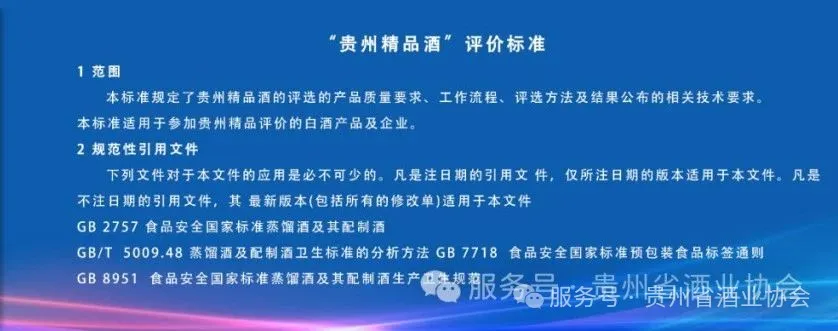
“标准”一经发布实施,马上获得了广大企业和消费者的认可。随着“标准”实施,另一深层次的问题,逐渐浮出。全省近2千多家全牌照酒生产企业,生产了约4万多个条码的酒产品,很多酒品良莠不齐。
The Standard was met with immediate recognition by enterprises and consumers alike. However, as it was rolled out, a deeper issue became evident: among the province’s more than 2,000 licensed baijiu producers, over 40,000 different products have been introduced, with quality varying widely.

从酒的全产业链看,在原料环节,受各种因素的影响,一些企业没能用到优质的原料;在生产环节,一些企业工艺落后,设备老化,技术陈旧,导致酒的品质难以保障;在销售环节,一些企业没有高效的销售渠道和平台,更没有质量售后持续保障体系;在消费环节,很多酒品不能适应和满足消费需求的变化等等。导致落后产能的企业与优秀企业争资源,产业内卷。
Across the industry chain, challenges persist: In raw materials, some producers struggle to access high-quality inputs. In production, outdated equipment and techniques hinder consistency and quality. In marketing, many lack efficient sales channels and reliable after-sales systems. In consumption, products often fail to match evolving consumer tastes. This has resulted in lagging producers competing with leading enterprises for limited resources, thereby intensifying inefficient internal competition within the industry.

从管理学角度看,每种产业企业都存在一个规模经济点,特别是酒这种管线流水的企业,规模经济效应影响特别突出。在酒的实物价值链上,从原料到半成品、成品,到商品,再到饮品四个价值链环节上,自然资源的物质形态不断变化,并实现了价值增值。这种变化是随着原料、生产、营销、消费的过程链式推进的;在酒的虚拟价值链上,即与纵向实物价值链平行的,由管理、技术、信息及信用、数字化资本、高智力劳动要素等构成的非耗散价值链,其要素消耗基本不随企业实物要素的消耗而消耗,在这虚拟价值链上,规模经济效应是非常突出的,注重这一效应,产品才能“价廉物美”。实现企业规模经济点,是行业企业设计并追求的最佳生产规模,也是生产成本降低的重要抓手。如上海大众与德国大众流水线相比,没有达到每条年产50万辆的设计,导致没有生产成本优势一样。
From a management perspective, every industry has an “economies of scale” threshold, and this is particularly evident in baijiu production, which follows a standardized, continuous manufacturing process where economies of scale have a pronounced impact. Along the physical value chain—from raw material to semi-finished and finished goods, and finally to commercial and consumer products—resources are transformed and value is added. This process moves forward through production, marketing, and consumption. Parallel to this is the virtual value chain, composed of non-depleting elements such as management, technology, information, credit, digital capital, and intellectual labor. These elements are not consumed in the same way as physical inputs, and their efficiency is amplified at scale. Leveraging this effect is crucial to achieving both quality and affordability. Reaching the scale-efficiency point is essential for lowering costs and maximizing output. Shanghai Volkswagen, for instance, did not reach the intended production target of 500,000 units per line per year as seen in Germany, and thus was unable to achieve cost efficiency.

贵州约2千家全牌照酒生产企业,应该说相当一部分没有达到规模经济点,也有少部分企业超过规模经济点而导致规模不经济。这些都是需要我们不断去改变(变革)的。
With nearly 2,000 fully licensed baijiu producers in Guizhou, a large portion still operate below the threshold of economies of scale, while a small number have expanded past it, resulting in operational inefficiencies. These structural imbalances highlight the urgent need for sustained reform.
变革可用市场和行政两种手段。酒品在管理学划分的四种商品市场形态中,基本属于完全市场竞争产品(除极少数具有特殊工艺和文化传承,难以模仿的差别酒品外)。对于完全市场竞争产品,最有效的变革手段,就是市场手段。
Reform can be driven by market forces or administrative intervention. In business theory, baijiu—except for a few uniquely crafted or culturally distinctive variants—belongs to the category of products in perfect competition. For such markets, market-based mechanisms are the most effective means of reform.
“贵州精品酒”的评价,完全利用了市场机制的作用,通过“政府支持,协会服务,专家把关,企业自律,消费者监督”和企业与协会的管理(服务自律监督)互动,已经或将会促进贵州白酒质量的提升;推动优胜劣汰,企业兼并重组,促进资源向优秀企业集中,实现企业规模经济,降低成本,提升产能。同时,推动酒品创新,不断产出满足新时代消费需求的酒品,在满足中国消费需求的同时,不断地去开拓本就属于世界三大蒸馏酒之一的酱香白酒全球市场。相信在政府和企业及行业协会、消费者的共同努力下,贵州白酒一定会再显新辉煌,再展新风采。
The evaluation system for “Guizhou Premium Liquor” fully leverages market mechanisms. Through a collaborative model of government support, association services, expert review, corporate self-regulation, and consumer oversight—as well as dynamic interaction between enterprises and trade bodies—the initiative has already begun to elevate quality across the sector. It is promoting a survival-of-the-fittest environment, encouraging mergers and restructuring, enabling resource consolidation around leading enterprises, improving economies of scale, lowering costs, and boosting capacity. At the same time, it is driving innovation and producing baijiu that meets modern consumer expectations. While fulfilling domestic demand, it also aims to expand the global market for sauce-aroma baijiu—already recognized as one of the world’s three major distilled spirits. With the concerted efforts of the government, enterprises, industry associations, and consumers, Guizhou baijiu will shine once again and embrace a renewed brilliance.
陈泽明博士后
by Dr. Chen Zeming, Postdoctoral Fellow
2025年7月16日
July 16, 2025